Student Login |


Saturday, August 01, 2026
Home » cGMP: Introduction to Supplier Quality Assurance

cGMP: Introduction to Supplier Quality Assurance
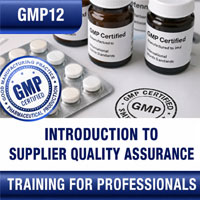
cGMP: Introduction to Supplier Quality Assurance Certification Training


Program/Course ID:GMP12
Enrollment Period:12 months.
Average Learning Time:~60 minutes.
Additional Resources:Supplemental materials & activities.
Credit Hours:2 credits.
Method of Training:
Online, asynchronous, self-paced eLearning.
Outline/Syllabus:Click here to view training outline.
LMS Compatible: SCORM-compliant; request a quote.
Accessibility:24/7 access to all program materials.
Catalog:Good Manufacturing Practice (cGMP).
Demonstration:Four (4) free trial courses are available.
Group/Employee Training: Click here to request a quote or invoice.
Final Assessment:Multiple choice; unlimited attempts.
Certificate:Encrypted PDF with QR validation code.
  Price: $199.00 USD  

Showcase your commitment to quality, compliance, safety, and professional excellence by earning a recognized certification of training.

Training Program: cGMP: Introduction to Supplier Quality Assurance
Training Provided By: Biopharma Institute
Website: https://www.biopharmainstitute.com

Schedule: Self-paced eLearning. Immediate access to training materials upon enrollment.
Description:
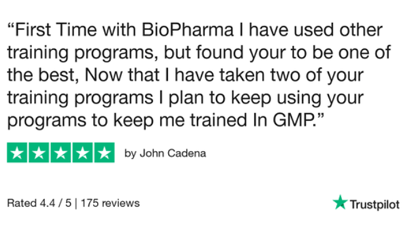
Biopharma Institute Reviews

Suppliers play a critical role in the quality, safety, consistency, and regulatory compliance of products and services. Organizations must therefore establish effective processes for selecting, qualifying, approving, monitoring, and periodically reviewing suppliers within their Quality Management System.

Introduction to Supplier Quality Assurance provides a practical overview of the fundamental principles and activities used to manage supplier quality. The course explains why Supplier Quality Assurance is an essential component of an effective QMS and how a risk-based approach helps organizations apply an appropriate level of oversight to different types of suppliers.

Participants will learn how suppliers may be classified according to the potential impact of their materials, products, services, or activities on product quality, patient safety, data integrity, regulatory compliance, and business continuity. The course also introduces the major stages of the supplier lifecycle, including initial evaluation, qualification, approval, quality agreement development, performance monitoring, periodic review, and corrective action.

Practical examples and workplace application activities help participants understand how Supplier QA requirements may be incorporated into day-to-day operations. By the end of the course, learners will have a clear foundation for supporting supplier management activities within a structured and risk-based QMS framework.

Take the next step in your professional growth and earn an industry-recognized certification from Biopharma Institute -designed for professionals who want to excel in ensuring the safety and effectiveness of medicinal products.

These programs not only give you up-to-date regulatory and compliance insights but also deliver practical skills that employers value. Whether you're enhancing your current role or preparing for a new opportunity, Biopharma Institute certifications are designed to set you apart in the competitive and highly regulated pharmaceutical industry.


Outline:


  • Introduction to Supplier Quality Assurance
    • Definition and purpose of Supplier Quality Assurance
    • The role of suppliers within a Quality Management System
    • Why supplier controls are important to product quality and compliance
    • Responsibilities of Quality Assurance, Procurement, Operations, and other departments
    • Overview of the supplier lifecycle
    • Examples of materials, products, and services supplied to regulated organizations
  • Risk-Based Supplier Classification
    • Principles of risk-based supplier management
    • Factors used to evaluate supplier risk
    • Potential impact on product quality, patient safety, and regulatory compliance
    • Classification of critical, major, and lower-risk suppliers
    • Risk considerations for materials, components, services, contractors, and consultants
    • Determining the appropriate level of supplier oversight
    • Documenting supplier risk assessments and classifications
  • Supplier Qualification and Approval
    • Prequalification and initial supplier evaluation
    • Collection and review of supplier information
    • Supplier questionnaires and supporting documentation
    • Review of certifications, licenses, regulatory history, and quality systems
    • Supplier audits and remote assessments
    • Sample evaluation, testing, and trial orders
    • Qualification criteria and approval decisions
    • Conditional approval, rejection, and disqualification
    • Maintaining an Approved Supplier List
  • Supplier Quality Agreements
    • Purpose and importance of Supplier Quality Agreements
    • Circumstances in which a Quality Agreement may be required
    • Responsibilities of the purchasing organization and the supplier
    • Quality standards and specifications
    • Documentation, record retention, and data integrity requirements
    • Deviation, investigation, and corrective action responsibilities
    • Change notification and change-control requirements
    • Complaint handling, recalls, and regulatory inspection support
    • Review, approval, revision, and renewal of Quality Agreements
  • Performance Monitoring and Periodic Review
    • Ongoing monitoring of supplier quality and service performance
    • Supplier performance indicators and scorecards
    • Evaluation of deviations, defects, complaints, and delivery performance
    • Monitoring corrective and preventive actions
    • Trending supplier-related quality data
    • Supplier communication and escalation
    • Periodic supplier review and requalification
    • Changes in supplier risk classification
    • Suspension, remediation, or removal of suppliers
  • Workplace Application
    • Applying Supplier QA principles within an organization
    • Identifying suppliers that require formal qualification
    • Selecting controls based on supplier risk
    • Reviewing supplier documentation
    • Recognizing supplier-related quality issues
    • Escalating concerns through the appropriate QMS process
    • Supporting audits, reviews, investigations, and corrective actions
    • Practical supplier-management scenarios
  • Conclusion
    • Summary of key Supplier QA principles
    • Review of the risk-based supplier lifecycle
    • Importance of documented and consistent supplier controls
    • Individual responsibilities for maintaining supplier quality
    • Final knowledge assessment

Objectives:


  • Training Objectives
    • Explain the purpose and importance of Supplier Quality Assurance within a Quality Management System.
    • Describe how supplier performance can affect product quality, patient safety, data integrity, regulatory compliance, and business operations.
    • Identify the principal stages of the supplier qualification and management lifecycle.
    • Explain how suppliers are classified and controlled using a risk-based approach.
    • Recognize the types of information and documentation commonly reviewed during supplier qualification.
    • Describe the purpose and typical content of a Supplier Quality Agreement.
    • Explain how approved suppliers are monitored, periodically reviewed, and requalified.
    • Identify common supplier performance measures, quality concerns, and escalation requirements.
    • Recognize the responsibilities of Quality Assurance, Procurement, Operations, and other departments involved in supplier management.
    • Apply basic Supplier Quality Assurance principles to common workplace situations.
  • Intended Audience
    • Personnel who are new to Supplier Quality Assurance.
    • Personnel seeking an overview of supplier-management practices within a Quality Management System framework.
    • Experienced personnel requiring basic refresher training.
    • Quality Assurance and Quality Control personnel.
    • Procurement and Purchasing personnel.
    • Supply Chain and Materials Management personnel.
    • Manufacturing and Operations personnel.
    • Regulatory Affairs personnel.
    • Validation and Engineering personnel.
    • Research and Development personnel.
    • Laboratory Operations personnel.
    • Auditing and Compliance personnel.
    • Contract and Vendor Management personnel.

Use Search to Find What You're Looking For:
  

Benefits of Training with Biopharma Institute

Immediate Course Access: Login details, instructions, and payment confirmation are emailed immediately upon online enrollment.
Self-Paced eLearning: Enjoy 24/7 access to all course materials and assessments for 12 months.
Open Enrollment: No prerequisites or prior work experience required to start.
Expert-Developed Content: Courses are designed by subject matter experts (SMEs) in their respective fields.
Up-to-Date & Validated: Training is regularly updated to meet current regulations and is third-party validated or accredited.
Optimized for Learning: Courses feature voiceovers, intuitive navigation, reading materials, case studies, progress checks, and animations to boost knowledge retention.
Secure Access: Encrypted connections, firewalls, and daily malware scans ensure security and system performance.
Flexible Assessments: Multiple-choice exams can be retaken until a passing score is achieved.
Instant Certificates: Certificates are issued instantly in secure PDF format with watermark, unique validation code, and QR code for verification.
Training Verification: Certificates can be verified online using a QR code or unique ID. Digital badges are included with professional certifications.
Manager Access: A secure portal allows managers to view and download enrollment reports, training records, account balances, and more.
SCORM-Compliant: Courses can be integrated directly into most corporate Learning Management Systems (LMS).
Purchase Orders: We accept POs from all companies. Request an invoice to start the procurement process.
Employer Reimbursement: Some employers may cover training costs -check your company's reimbursement policy.
Financial Assistance: Payment plans are available for eligible learners, or purchase courses individually as needed.
Career Advancement: Professional certifications highlight dedication to career growth, enhance resumes, provide interview talking points, and equip learners with practical job skills.


Have Questions? Contact Us:


Use the form below to request more information about our programs. You can also request a quote for group training or an invoice to generate a company purchase order. For quotes or invoices, please include the course title(s) and the number of students.

Name:
Company:
Phone:
Email:
 
Enter the number from the image above:
Comments:


For quotes or invoices please provide the titles of the course(s) and number of students.